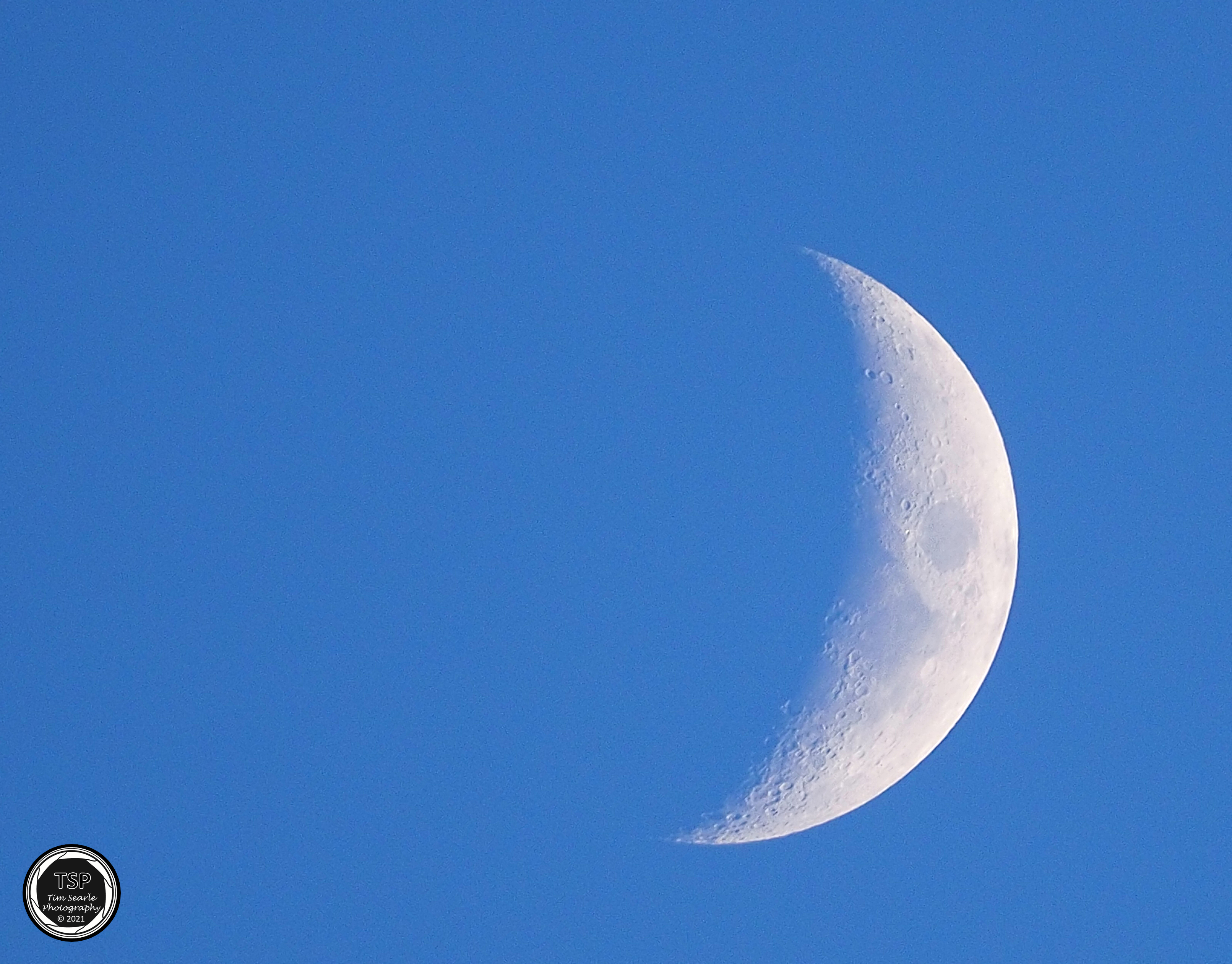
The Moon during Daylight
Taken on 7th January 2022, the moon was still out mid-morning. This makes it really easy to get the right light, without the brightness of the moon's reflection getting too powerful. Although it is not a full moon, the blue sky in the background makes for an unusual composition. I used my lens with the longest distance to get a bigger image & fill the frame more, which saves cropping & loosing some of the details. The disadvantage of this is that, the camera cannot move at all, so a sturdy tripod is required. Location: Horncastle Community Woodland, South of Horncastle, there is a small car park where locals walk their dogs & get some fresh air on their route to or from work. I have taken many photos at this location, which is always good for some Macro shots of Dragon Flies, Ladybirds & Ants.
Olympus OM-D E-M5 mk iii ~ f6.7 ~ 1/100 sec ~ ISO 200 ~ 300mm
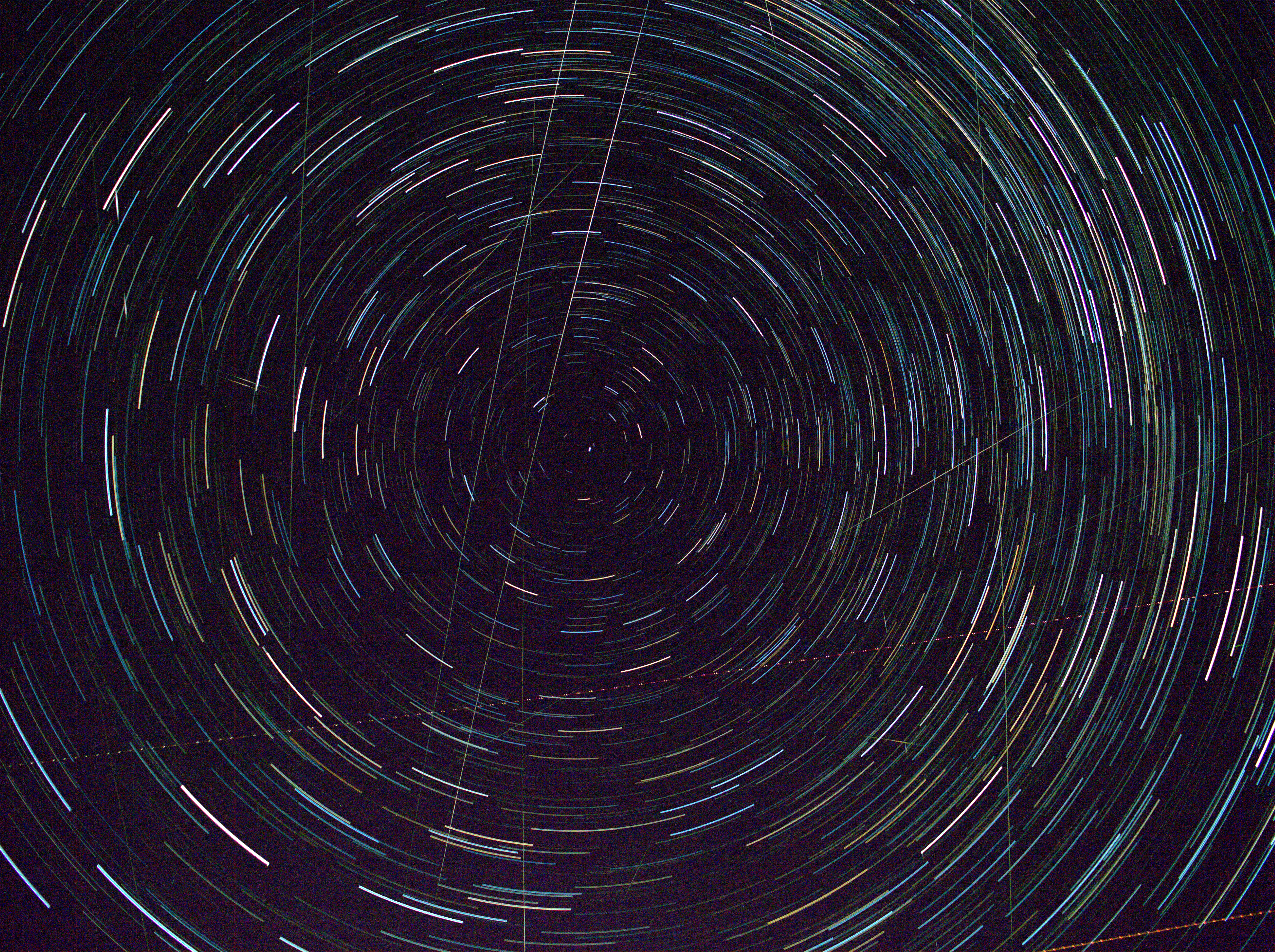
Star Trail
Once the settings are adjusted correctly, Star Trails are fairly simple to capture. The essential part of this genre is to have a sturdy tripod because the shutter is open for a long period of time. Any movement in the position of the camera woud cause blurryness and make the image look out of focus. This image took around 30 minutes to capture with the apature open as much as the lens will allow. A high ISO is required to allow the sensor to render the small amount of light. However, one of the key aspects of this type of photography is to have the apature open for a long period, but it can be difficult to know how long - this is where Live Composite comes into it's own. There is a LIVE update on the cameras screen, which can be set to update at certain intervals. By watching the screen periodically, the photographer can estimate when to close the shutter.
Olympus OM-D E-M5 mk iii ~ f2.9 ~ 30 mins ~ ISO 1600 ~ 14mm
The Milky Way
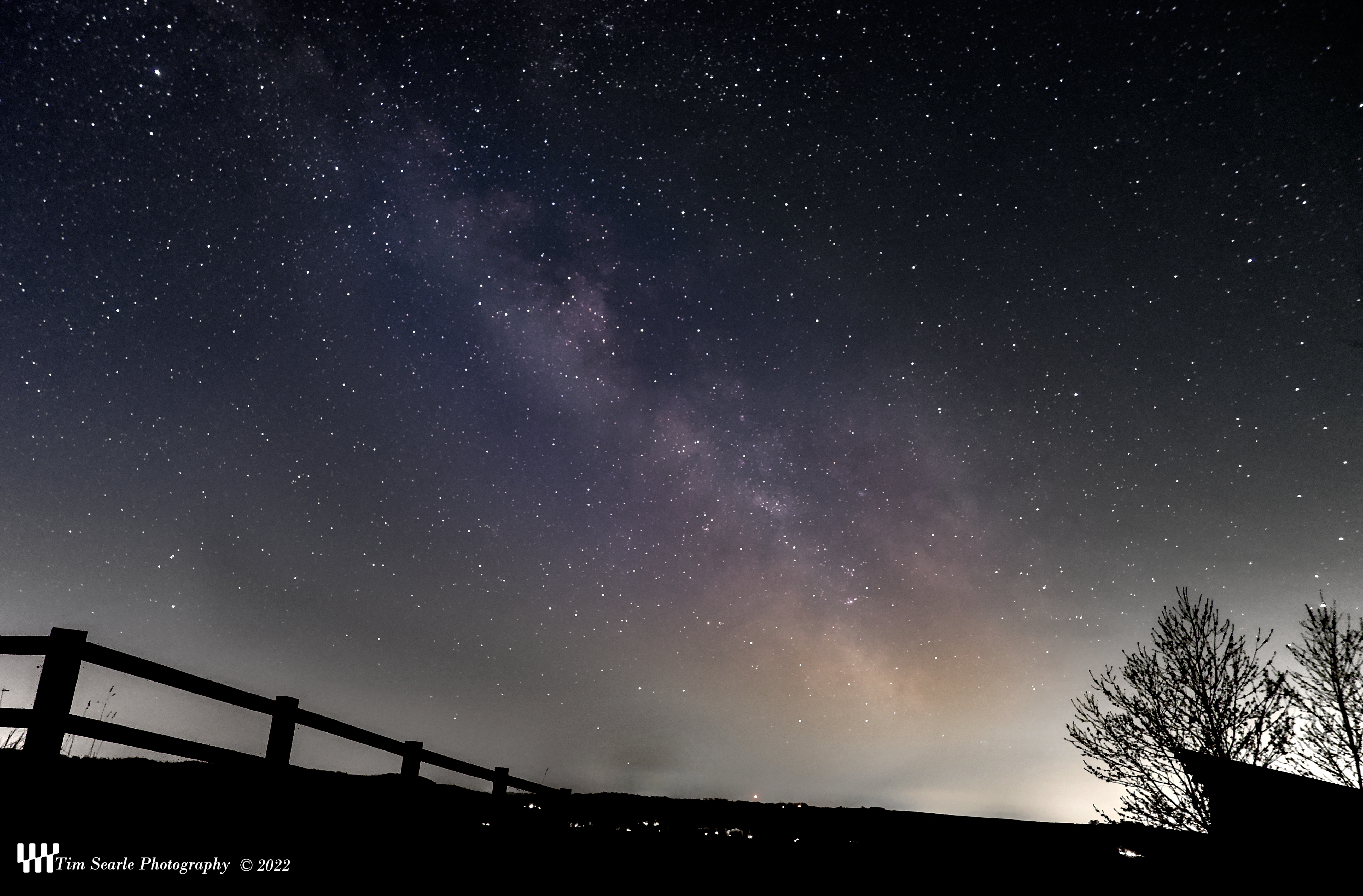
I have to say, these are the photographs I have the most difficulty with. Milky Way images take a lot of processes to get a decent final picture. This genre can be done with one single image, but to get the clearest final picture, it is best to take several exposures. For this image, I took 10 images, each was 10 seconds long. It is still hard to see how much detail is in each one until using specific Stacking software back home on my PC. The software I choose to use is called Sequator, which loads all the RAW files, stacks the stars but leaves the ground, then plots the movement of the stars & automatically aligns them to produce a PNG image. This, then, has to be edited in Darktable & GIMP to create the final image. Images taken at Badger Farm near Stenigot in Lincolnshire.
Olympus OM-D E-M5 mk iii ~ f2 ~ 10 x 10 sec exposures ~ ISO 3200 ~ 14mm
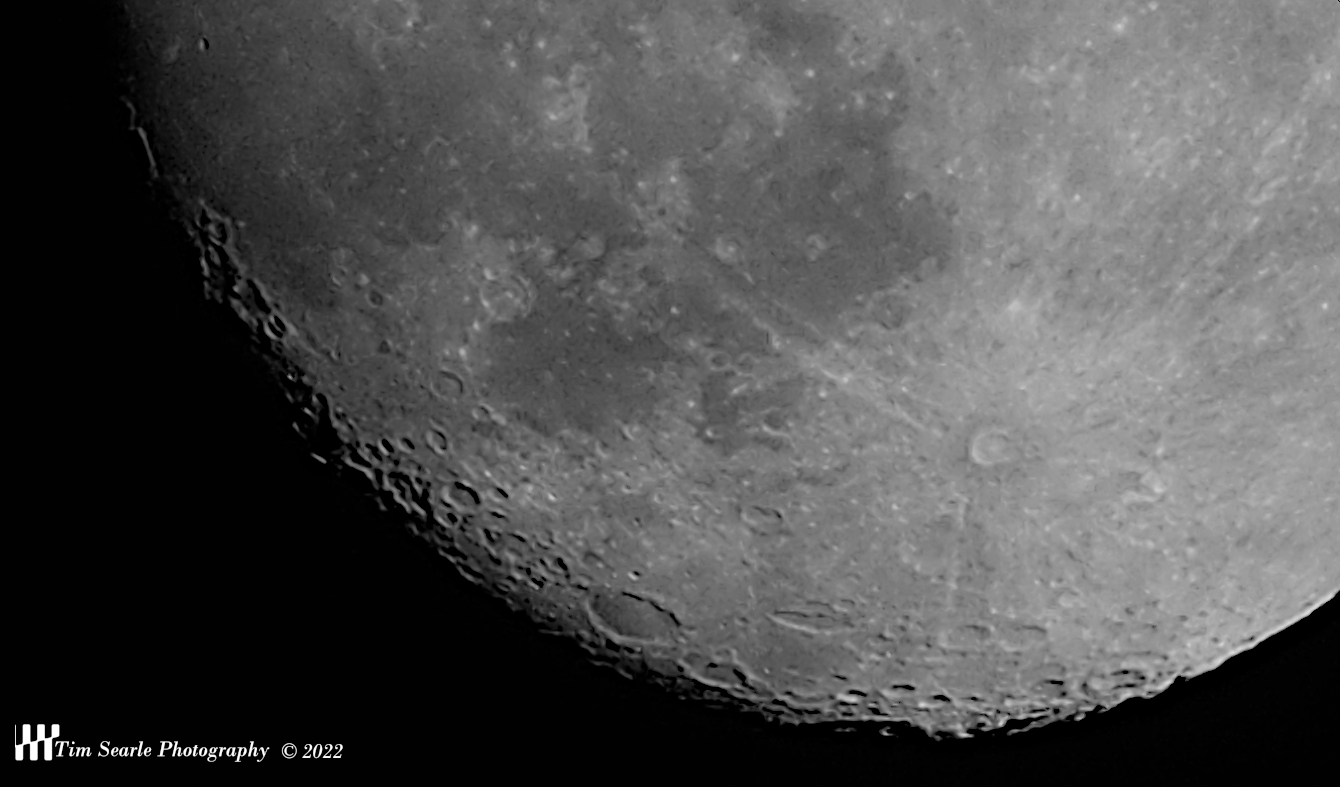
Moon Craters
As can be seen by the info at the bottom of this panel, the settings are completely different between Deep Space photographs and Lunar photographs. The reason for this is the amount of reflected light from the sun. The Moon is much closer to Earth, therefore, reflecting more light than the Milky Way & Stars do. With more light, a smaller apature and shorter shutter speed are required for the sensor to get enough to process it. Also note, in the camera settings info, the 2X TC refers to the built In TeleConverter, which Magnifies the image two-fold. This sometimes has a detrimental effect on the final image, although this can be corrected in Post-Processing.
Olympus OM-D E-M5 mk iii ~ f11 ~ 1/100 sec ~ ISO 1600 ~ 300mm ~ 2x TC
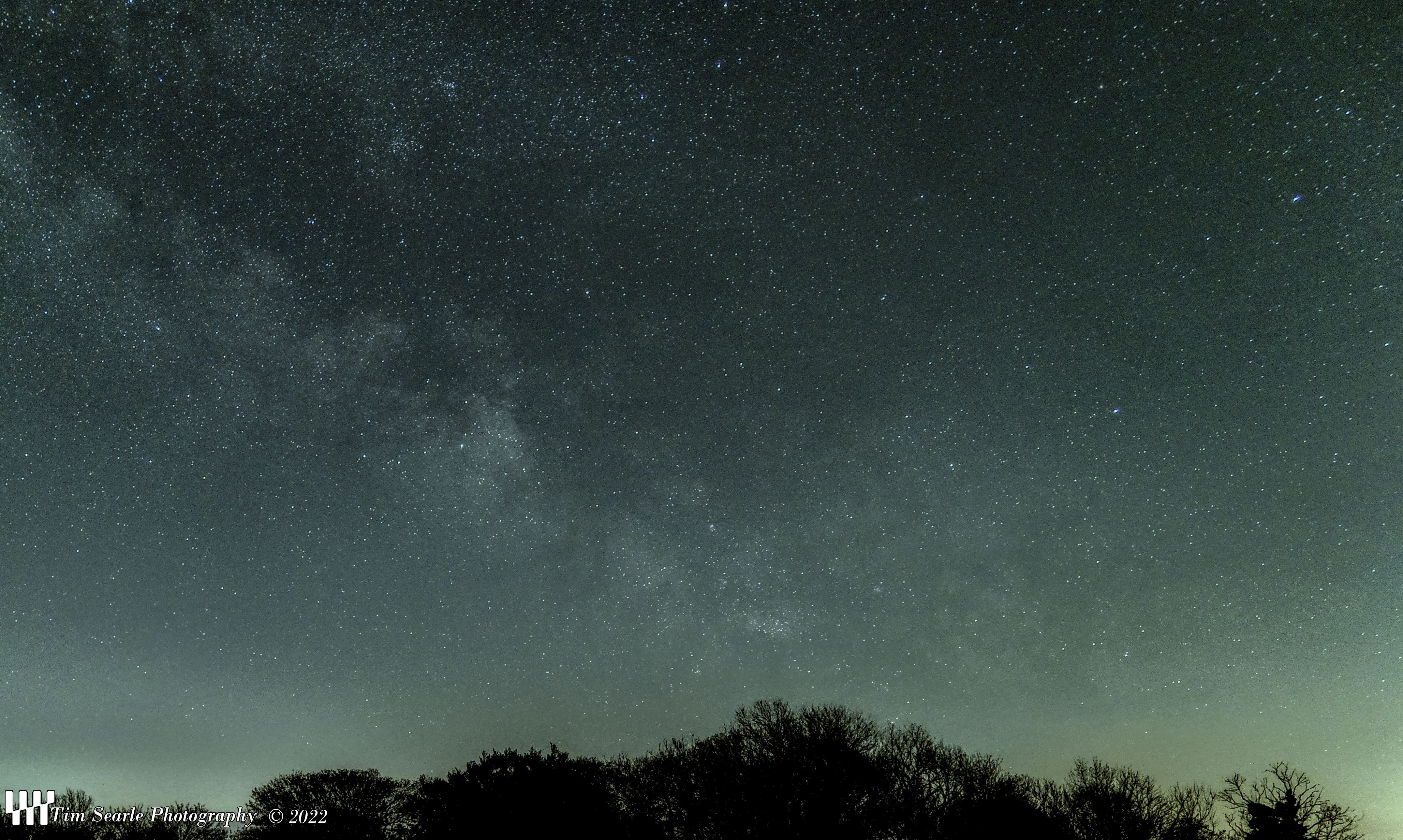
The Milky Way - Revisited
This is another Stacked set of images I took, but this time, They were captured at the top of the hill at Tetford. For this image, I took 10 images, each was 13 seconds long, which may have been slightly too long as you can see some Elongation of some of the stars.The images were stacked in Sequator again, and edited in my two favourite FREE Post-Processing Apps Darktable & GIMP. Tetford is nearly as good as Stenigot, in that, it is in an area which has very little ambient light at night - This can be checked by visiting a site called Light Pollution Map, just zoom into your chosen area, like you would with Google Maps.
Olympus OM-D E-M5 mk iii ~ f2 ~ 10 x 13 sec exposures ~ ISO 3200 ~ 14mm